Industrial Pretreatment Programs: A Guide for Operators
How industrial pretreatment programs protect your plant from toxic slug loads, plus local limits, headworks analysis, and enforcement basics.
What Is an Industrial Pretreatment Program?
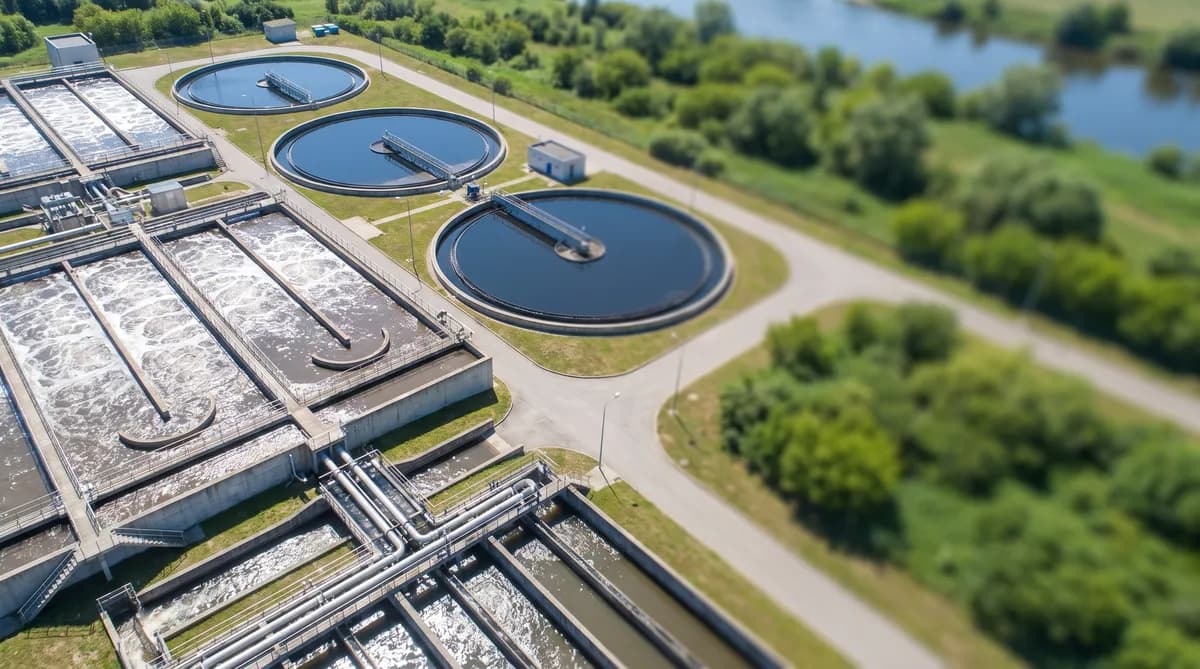
An Industrial Pretreatment Program (IPP) is a set of local rules and monitoring requirements that stops industrial dischargers from dumping toxic or overloading waste into your collection system. Industrial pretreatment programs are governed by federal rules under 40 CFR Part 403, and their whole job is to protect your treatment process and your permit.
Here's the deal. Your plant is built to handle domestic sewage and a controlled amount of industrial flow. But breweries, food processors, metal finishers, and plating shops can send you waste that's nothing like what comes off a residential street. Left unchecked, that waste can cause problems the regulations define precisely. "Pass Through" is a discharge that exits the POTW in quantities or concentrations that cause or contribute to a violation of your NPDES permit. "Interference" is a discharge that inhibits or disrupts your treatment process, sludge use, or sludge disposal and causes or contributes to a permit violation - note that Interference does not require your bugs to be killed, just disrupted. The IPP is how a Publicly Owned Treatment Works (POTW) keeps both from happening.
If your plant has a total design flow over 5 MGD, the Approval Authority generally requires an approved pretreatment program when the POTW receives industrial discharges that pass through or interfere (smaller POTWs can be required to run one too). Keep in mind the Approval Authority may be an authorized state agency rather than EPA directly. Running an approved program means building an industrial user inventory, classifying your Significant Industrial Users (SIUs), developing defensible local limits (or demonstrating they aren't needed), and keeping a written Enforcement Response Plan on file.
Key Takeaway
An industrial pretreatment program protects your plant two ways: it stops toxic pollutants from passing through untreated into the receiving stream, and it stops shock loads from disrupting your biological treatment. Programs are required under 40 CFR Part 403, and without one, your plant has no protection.
Why Do Industrial Discharges Threaten Your Plant?
Industrial discharges threaten your plant with FOG blockages, high-strength BOD slugs that crash dissolved oxygen, pH swings that inhibit the bugs, and heavy metals that poison nitrification and contaminate biosolids. You've probably seen a few of them show up in your settling tests and DO readings.
FOG (Fats, Oils, and Grease): Cools, solidifies, and cakes onto pipe walls. That's hard blockages and backups in the collection system before the waste ever hits your headworks.
High-strength BOD slug loads: Breweries and food processors can dump a slug of BOD that strips dissolved oxygen out of your aeration basins faster than your blowers can push it back in. If the load is big enough and lasts long enough, the system can go septic, and you can end up growing low-DO filaments and watching your sludge bulk. If you're fighting settling problems, understanding BOD removal efficiency helps you see how fast a load like that can eat into your margin.
pH swings: Your bugs live in a tight window, roughly 6.5 to 8.5. Federal rules (40 CFR 403.5) specifically prohibit discharges below pH 5.0 unless the POTW is designed to handle them. An acid dump below pH 5.0 or a caustic slug above pH 10.0 can severely inhibit biological activity, with the actual damage depending on the magnitude and duration of the excursion, the buffering in your system, and the organisms involved. You can get deflocculation, where the sludge loses its ability to settle and gets carried out of the clarifier, which spikes your effluent turbidity. Aggressive acidic conditions can also corrode concrete pipe over time.
Heavy metals and biocides: This is the one that scares plants running nitrification. Nitrosomonas and Nitrobacter are extremely sensitive to metal toxicity. A shock load of zinc from a plating shop can seriously inhibit or even shut down nitrification, and depending on the concentration, duration, and your loading, you could be looking at an ammonia problem on your next sample. Metals also accumulate in your sludge. Above the applicable 40 CFR Part 503 pollutant limits, you can lose the ability to land-apply the affected biosolids or be forced into a different management route - though source control and future compliant biosolids can restore eligibility. If you run a nutrient removal process, the biological nutrient removal guide shows just how touchy those nitrifiers are.
What Gives a Pretreatment Program Its Legal Teeth?
A pretreatment program's legal teeth come from adequate, enforceable legal authority - locally, that often means a Sewer Use Ordinance (SUO), though it can also come through statutes, contracts, or other enforceable mechanisms. You can't enforce rules you don't legally have.
An SUO can't just be a polite request. To satisfy the Clean Water Act, it has to give the POTW real enforceable power. That means the ability to deny or put conditions on new industrial hookups, require compliance schedules for industries that are failing, and to seek or assess civil and criminal penalties and other appropriate relief - subject to how enforcement authority is allocated under local and state law.
Two pieces matter most for operators:
- The legal authority has to be genuinely enforceable, whether through administrative orders, civil or criminal actions, contracts, or state-authorized mechanisms, not just a paper policy.
- It has to give POTW staff the right to enter an industrial site to inspect and sample, independent of whatever self-monitoring data the industry hands you (subject to lawful access procedures and safety requirements).
That independent right of entry is huge. It means you don't have to take an industry's word for it.
How Do Headworks Analysis and Local Limits Work?
Local limits are the pollutant numbers you enforce on industrial users, and they come from a Headworks Analysis that back-calculates the most pollutant your plant can take without failing. Local limits aren't always individual numeric limits for every user - they can be concentration limits, mass limits, best-management practices, or sector-specific limits allocated to selected users.
The process runs in two steps.
Step 1: Find the Maximum Allowable Headworks Loading (MAHL)
For each pollutant, like copper or cyanide, you calculate the primary endpoints:
- Pass-Through Limit - derived from your POTW's NPDES permit limits and plant removal performance (those permit limits may be water-quality-based or technology-based).
- Inhibition Limit - the concentration or loading that causes unacceptable inhibition of your activated sludge or your anaerobic methanogens.
- Sludge Quality Limit - the level that would push your biosolids past applicable Part 503 pollutant limits.
The lowest of those endpoints becomes your MAHL. You always protect against the weakest link. Keep in mind a full headworks analysis may also weigh additional criteria like worker health and safety, collection-system protection, and air emissions.
Step 2: Find the Maximum Allowable Industrial Loading (MAIL)
This is the poundage you can hand out among your permitted industries. As a simplified illustration:
MAIL = MAHL - (Domestic Loading + Safety Factor)
You subtract out what residential sewage already contributes (domestic loading) and a reserve or safety allocation. In practice your approved methodology may also subtract other background, uncontrolled, or hauled-waste loadings, and the safety factor is typically handled as a reserve allocation. What's left is the total pounds of that pollutant you can safely divide among your SIUs.
Exam Tip
Remember the order: MAHL comes from the LOWEST of the calculated endpoints, then MAIL subtracts domestic loading and a reserve allocation. A common exam trap is to flip this and ask you to pick the highest endpoint. Always pick the lowest. Exam content varies by state and certifying body, so check your own exam blueprint.
How Do You Enforce Limits With Inspections and Sampling?
You enforce pretreatment limits with unannounced, randomized inspections and the correct sampling method for each parameter - composite samples for average conditions, and legally required grab samples for pH, cyanide, total phenols, oil and grease, sulfide, and VOCs. Operators and pretreatment staff often sit on the front line here (specific duties are assigned by each POTW and can depend on operator grade in your state).
Inspections confirm an industry's pretreatment equipment is actually running and their slug control protocols are in place.
The single biggest thing to know is sampling method, and it's not one-size-fits-all. Automated composite samplers, which pull small aliquots over a sampling period (for example, every 15 minutes over 24 hours), are used for many parameters to characterize average conditions. But grab samples aren't just acceptable - they're legally required under 40 CFR 403.12 for certain parameters, specifically pH, cyanide, total phenols, oil and grease, sulfide, and volatile organic compounds. Those constituents volatilize, degrade, or adsorb to sampling equipment over a composite period, so a grab is the only way to get a valid result.
One caution on compositing: equal aliquots pulled at fixed 15-minute intervals give you a time-proportional composite, not a true flow-weighted composite. A flow-weighted sample has to vary the aliquot volume or collection frequency according to measured discharge flow. And while a composite characterizes the average over its window, it can dilute or mask a short-duration peak. So detecting a dilution stunt or a slug discharge often takes more than one sample - flow records, targeted grabs, continuous monitoring, inspections, and production or water-use records all come into play. The old rule still holds: dilution is not the solution to pollution.
For the full federal framework, the EPA's National Pretreatment Program lays out the Part 403 requirements in detail, including the sampling provisions above.
A Note on Industrial Operator Licensing
Most training tracks focus on municipal plants, Class 1 through 4. But some states license the industrial side separately. Illinois EPA runs a state-specific system with a distinct "Class K" license for industrial wastewater operators. If you work at a private industrial discharger rather than a POTW, check with your state regulatory agency, because the credential you need may not be the standard municipal track. Requirements vary by state and change over time.
If you're studying for any of this, pretreatment material can show up on higher-level exams, and telling your MAHL from your MAIL is worth drilling. Coverage varies by jurisdiction and exam blueprint, so the right exam prep tools help you drill these until they stick.